
Climate & Atmospheric Research
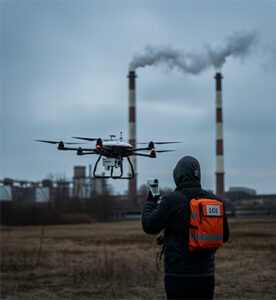
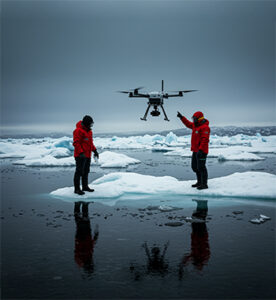
Understanding the Earth’s atmosphere is essential to addressing global challenges such as climate change, pollution, and extreme weather events. Drones have emerged as indispensable tools for atmospheric scientists, offering high-resolution, real-time data collection in areas unreachable by traditional instruments.
At AKSI Group, our advanced UAV systems are engineered to support environmental and atmospheric research through precise sensor integration, autonomous flight control, and data analytics. From measuring greenhouse gases to studying air quality and weather dynamics, these drones enable researchers to capture accurate, consistent, and scalable environmental insights that drive global sustainability efforts.
Key Features
Advanced Environmental Sensors
Equipped with CO₂, CH₄, PM2.5, and humidity sensors to monitor key atmospheric and air quality parameters.
High-Altitude and Long-Endurance Flight
Designed for extended missions at varying altitudes to collect atmospheric data over large geographical areas.
Real-Time Data Transmission
Enables live streaming of temperature, wind, and pollutant readings for immediate analysis and forecasting.
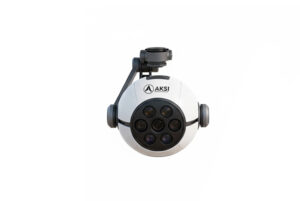
Thermal and Hyperspectral Imaging
Detects heat distribution, cloud formation, and atmospheric composition for advanced climate modeling.
Autonomous Weather Pattern Tracking
AI-enabled flight control adapts to changing wind and pressure conditions for consistent and safe operations.
Integration with Climate Databases
Compatible with meteorological software and GIS platforms for synchronized environmental research workflows.
All-Weather Durability
Built with corrosion-resistant materials and temperature-tolerant systems for extreme field conditions.
Data Analytics & Visualization Tools
Provides cloud-based analytics dashboards to visualize trends and generate actionable climate insights.
Key Benefits
- Atmospheric data collection and air quality monitoring
- Climate modeling and greenhouse gas measurement
- Weather forecasting and storm tracking
- Heat island and temperature distribution studies
- Volcanic gas emission and particulate monitoring
- Research on pollution dispersion and cloud microphysics
- Remote sensing for environmental impact studies
- Disaster prediction and early warning systems